PPE Fit Survey
LiveA short, mobile-first survey covering all five launch categories, capturing what fails, how it fails and what workers do to get through the shift.
Pre-launch · women-led · research phase
Safety should fit the worker. The worker should not have to fit the gear. Fit For Her Work Gear is documenting where today's hard hats, safety glasses, hi-vis vests, hearing protection and gloves fail women on the job — in their words, from the field — so the next generation of gear works with women, not against them.
About 4 minutes. No purchase, no order, no spam.
Research phase — no products are currently for sale
Proof of progress
This is a live pre-launch research and validation platform, not a concept deck. Every piece below is already running and collecting real input from women in the trades and from the employers who issue their gear.
A short, mobile-first survey covering all five launch categories, capturing what fails, how it fails and what workers do to get through the shift.
A community of women in the trades who agreed to follow-up questions and optional prototype testing if that stage opens.
Contractors, safety teams and apprenticeship programs share how they source and issue gear today — and where it breaks down.
A worker-owned fit record, entered by her and visible only to us for matching gear. Employers and HR see status only, never measurements.
The problem
Most PPE on a jobsite is built around one body template. When gear is too wide, too long, or won't cinch down, it stops doing its job: a vest snags, glasses slide, glove fingertips catch a fastener, a hard hat shifts when you bend. Workers then do what they have to do to get through the shift — roll it, tape it, tie it off, or skip it.
Rolled sleeves, knotted straps and cut-down vests are the workaround, and every modification moves gear further from how it was tested.
Relabeling a men's small does not change the shoulder width, chest shape, torso length or finger length inside it.
Women in the trades already know exactly what fails on them. That knowledge has never been gathered in one place. That's step one for us.
Our first five categories
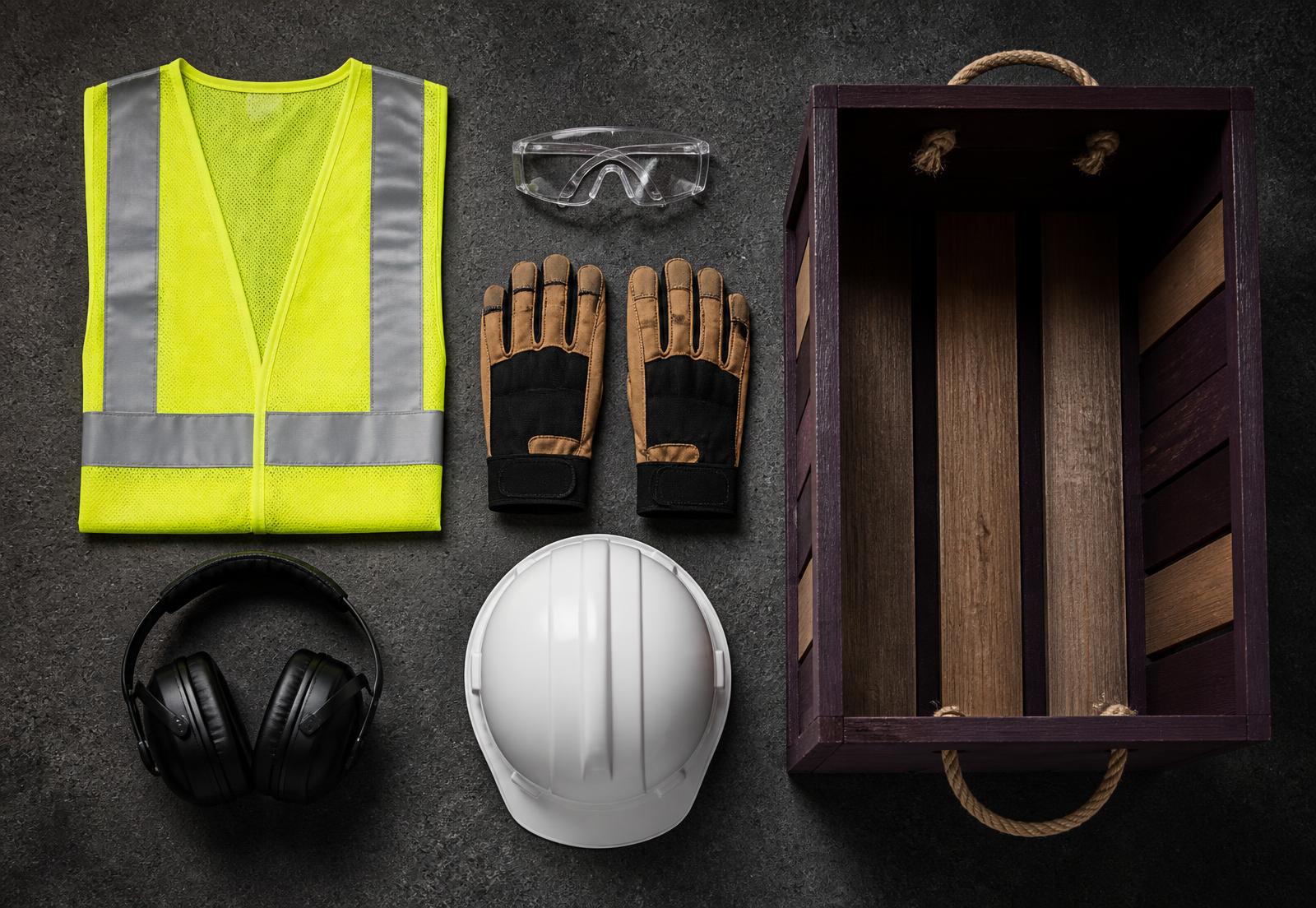
Fit For Her Work Gear is starting with five PPE categories, sized and shaped for women in the field. Women's workwear and maternity workwear may follow later; today the focus is head-to-hand protection.
Suspensions that tighten down small, stay put when you bend, and leave room for a ponytail or braid.
Frames scaled to narrower faces so they seal at the temples instead of sliding down your nose.
Length, width and reflective tape placement that work with a tool belt and a smaller frame.
Both earplugs and over-ear earmuffs, chosen to seal on your head and work with your hard hat.
True finger length and palm width so you keep grip and can still feel a fastener.
Demonstration version. Pricing, checkout and carrier tracking are not live yet.
How it works
One flow, five steps, and a hard line through the middle of it: the worker owns her fit information, the employer sees status only.
An employer or safety team purchases or sponsors a Fit For Her Work Gear PPE kit and invites the employee.
The employee receives her own private link and signs in to her own worker account.
Measurements and fit needs are entered by the worker, in her own account, under her control.
Fit For Her Work Gear uses her Fit Profile only to match and fulfill her gear. It is not shared with her employer or HR.
The employer sees status and tracking, and the finished kit ships to the employer's designated address.
What your employer can see
Your measurements are private. Your employer, HR team, manager and coworkers cannot see them. Fit For Her Work Gear uses your Fit Profile only to match and fulfill gear for you.
Your employer can see
Your employer cannot see
For employers
If you're hiring women into field roles, PPE fit shows up as a sourcing headache, a returns problem and an onboarding problem. We're researching how contractors, apprenticeship programs and safety teams handle it today — what you can actually buy, what you substitute, and what it costs you.
Share your sourcing experienceSizes and styles your suppliers stock for women in field roles — and the gaps.
How gear gets sized and issued to a new hire or apprentice right now.
Returns, replacements, substitutions and the time your team spends chasing them.
Two ways in: take the survey and tell us what fails on you, or join the Founding Research Crew so we can follow up — including optional prototype testing if that stage opens. Nothing is for sale and no order is placed.